Sunday, April 18, 2021

Podcasting for Education


Teachers in America is a podcast hosted by former teacher, Noelle Morris. I listened the episode titled Becoming a Better Learner. In this episode, Noelle spoke with educator and literacy coordinator Monica Fitzgerald. They discussed Monica's experiences as a young student struggling to adjust as her family moved around a great deal due to her father's military career. Monica shared the impact that specific teachers made on her life and eventual career choice towards education. I was really impacted by the ideas that Monica shared when she asserted that it is not necessarily students' learning that has the biggest impact on their futures, but teachers taking the time to pause and learn about their students. She explained that the curriculum is not the pinnacle of what the students need to get out of school; that often times it is the connection to their teachers and the opportunity to feel seen and cared for that has the most significant and lasting impact on children. Additionally, Monica pointed out that students "don't grow in the same way on the same day". Her exhortation that teachers can and should take the time to invest in their students personally and not feel the pressure to be always at the mercy of the curriculum really stuck with me. As educators, I think we can lose sight of the fact that the wild little people in front of us have emotional needs and struggles in much the same way that we do and we can find opportunities to make a difference in their lives for the better. I really enjoyed this podcast. Noelle Morris is a great interviewer who left plenty of space to hear from her guest, but also kept the conversation moving. The 20-30 minute run time is a perfect length for listening while taking a walk or getting some chores done around the house.


The Ten Minute Teacher Podcast, hosted by Vicki Davis was a great listen this week. I had the pleasure of listening to the episode entitled How to Close the Learning Gap. Vickie hosted educator and principal, Dr. Rachael George. Rachael shared about the struggles and concerns that teachers are facing in coming back to in-person education post-lockdown. She described the stress that teachers are experiencing knowing that their students will not only be behind, but also be dealing with some levels of trauma, anxiety, loneliness, and other lockdown related issues. Additionally, she acknowledged that there are some students who have checked out altogether while distance learning and hove been 'ghosting' their Zoom classes. Rachael explained that while there are legitimate concerns, the reality is that the strategies that have served teachers and schools well in the past will continue to do so as students and teachers transition back into the classroom. She pointed out that there are always a couple of students who struggle to engage and that--amid concerns of standardized testing--teachers are typically well aware of which students are a bit behind the average without any testing needed. I really appreciated the level-headed perspective she shared regarding re-transitioning back into the classroom. There surely will be struggles and challenges, but teachers are still capable equipped to do the most important things, which are to support, engage, and educate their students. She pointed out that there doesn't need to be panic when it comes to where everyone is at academically or otherwise. Connection, dedication, and patience will get things back on the right track. This really is a great podcast. Perfect little bite-sized episodes that you can listen to in the car running errands, in the morning while getting ready, or any time. If you have a spare ten minutes and you need a little encouragement and perspective, this is a great listen.

Podcasts are an excellent medium. Their popularity is certainly due to the endless variety of topics that can be found out there, but there is no doubt that they are also so popular because they are so easily consumable. They don't require visual attention like a TV show or even an educational video on YouTube video. You can listen any time your ears aren't busy with something else. And they are infinitely portable, travelling with you on your phone no matter where in the world you might be. Any time you're driving, washing dishes, going for a jog, winding down for the evening, or any number of other scenarios can be the perfect time to listen to a podcast. I listen to podcasts all the time on a huge variety of subjects from entertainment to current events to professional enrichment. I also recommend podcasts to others often. They provide access to insightful and accomplished people in any field out there and listeners can hear encouragement, ideas, news, resources, etc. in their chosen subject with just a few minutes and a pair of headphones. I think everyone should be availing themselves of this incredible format. There is no shortage of topics or episodes and it's a lot of fun to learn new things from smart people.


Saturday, March 20, 2021

TPACK And Its Impact On Educators


Dylan Rogers, the Editor In Chief at Schoology Exchange, wrote a blog post entitled The TPACK Framework Explained where he discussed not only TPACK itself, but also the importance of incorporating this philosophy into the classroom and how it can benefit educators and help them to improve the overall student experience. 
Rogers shares that it can be easy for many educators to assume that simply adding a tech tool to their lesson plan will improve the efficacy of the lesson, but in reality, teachers should be aware that the "
relationship between technology, content, and pedagogy, and the purposeful blending of them is key". He points out that TPACK impacts educators because it enables them to use technology more effectively in their classrooms and helps them develop what he calls "digital pedagogies". Rogers shares an excellent example of how an educator might use TPACK to improve their strategy for a particular lesson and enhance the student experience through the use of technology, collaboration and exploratory learning. But he is also quick to acknowledge that educators do not need to run full force at this philosophy and apply all of it to everything they prepare at all times. He points out that "this framework can help [teachers] think more strategically about how [they] are using technology in the classroom". While some teachers may benefit from application to each and every lesson, others might do just as well to use TPACK as a tool for revision and only employ it occasionally in order to refine and reimagine certain lessons. Either way, Rogers encourages educators to try out the philosophy and points out that there is a good deal to be gained from its implementation.

In his blog post entitled, Rethinking SAMR, TPACK, And Using Technology Well, educator and author Matt Miller shares his thoughts on TPACK. He discusses the impact this education philosophy has had on him and his personal views and practices, saying that TPACK helped him to keep things balanced when he was in the classroom. The philosophies presented by TPACK helped Mr. Miller--when he was a classroom teacher--to ensure that his fundamentals were in place and that he was putting any technology available to effective use in order to maximize learning outcomes. Interestingly, Miller also notes a caveat. He came to realize that while he did want to make the most of learning opportunities, he did not need to max out every possible application of philosophies like TPACK or SAMR every single time he entered the classroom. Miller recognizes that there are times--depending on the lesson--when different aspects and different parts of the systems would be most effective. He resolved to think of himself more as a carpenter rather than a mountain climber. He did not feel the need to reach the pinnacle of each education paradigm with every interaction, but rather knew that his students were best served if he was careful to "plan the course and choose the best tools possible to construct the best experience". 

I agree with Miller that philosophies like TPACK work best and serve our students best when they are seen as tools to be brought out as needed, and not when they are seen as rigid requirements to which teachers must adhere. Though Rogers suggests that TPACK can be applied to each and every lesson, he also acknowledges that it is not necessarily the singular key to unlocking great learning outcomes. 
I'm curious to find how this will play out for me as an individual. I wonder if it will feel a great deal different to employ a philosophy like TPACK in my own classroom compared to the way I was educated. I'm interested to explore the possibilities that incorporating technology and pedagogy to bolster content will open for my future students.
It's possible that there will be some challenges to implementing TPACK in my own philosophy of education. I can identify with Miller feeling the pressure to scale the mountain of these ideals at every attempt. I also agree with Rogers that so many teachers "see technology as a silver bullet" for education rather than as a tool that can act as an aid to enhance learning.We as educators cannot simply throw tech--even good tech--at students and expect that to bring about results. The application of technology to an educational environment must be purposeful and precise. It is a challenging balance to strike.
Personally, I do hope to apply the TPACK philosophies to my lessons in the future. I think it's an excellent tool that will serve myself and my students well. TPACK serves to help educators approach learning more holistically. It seems to have a significant impact on learning outcomes because it takes in to account not only an educator's knowledge base, but also their teaching methodology as well as how they employ technology to support these two factors. It strives to bring these three educational keys into harmony so that the end result is an effective teaching strategy that produces the best outcome for both teachers and students. I look forward to seeing the fruit of this philosophy in my classroom.


Saturday, February 20, 2021

School and Social Media: Oil and Water?


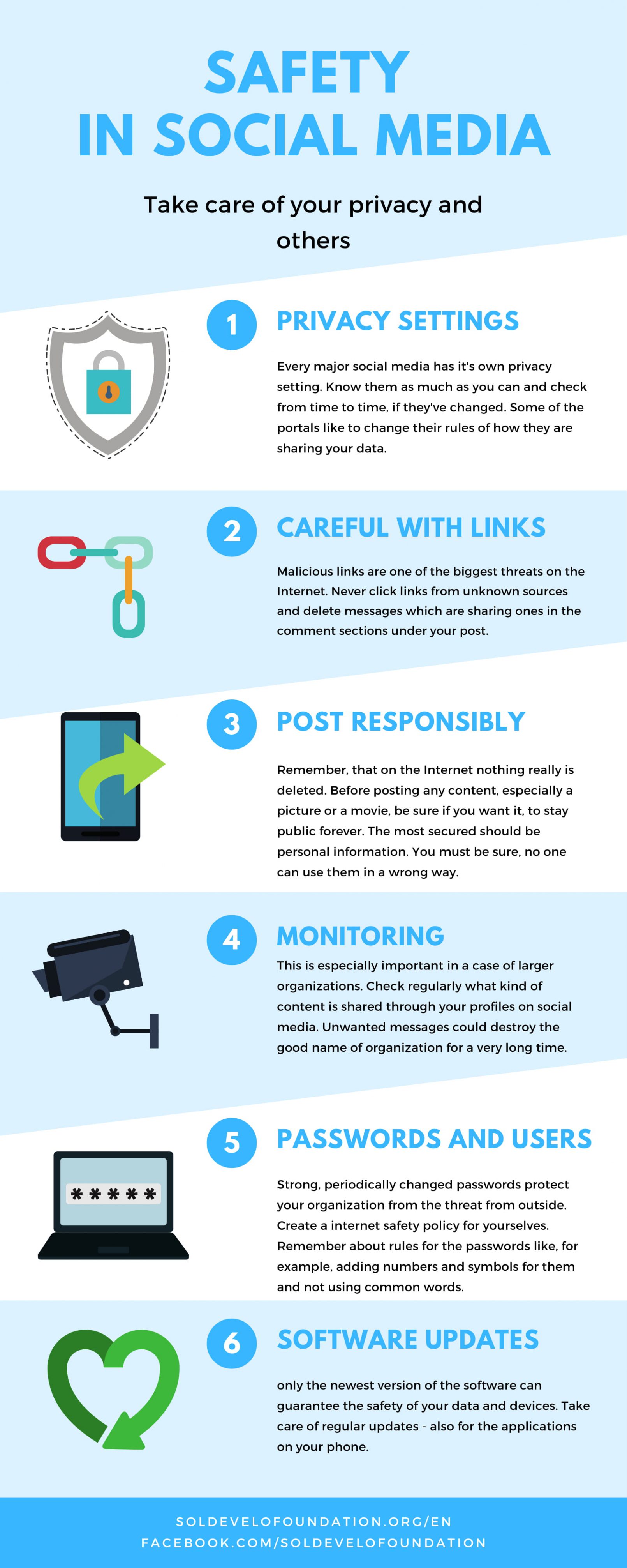
Teachers and parents may hold fears that social media usage could easily get out of hand. These concerns are reasonable and valid. Bringing social media usage into the classroom could prove to be disastrous if handled poorly. But the reality is that the same could be said for a number of things from teaching young children how to use scissors to hs chemistry classes to teaching teenagers to drive. When we maintain high standards for how training should be carried out and set high expectations for how students will use the tools they're given, what we are actually doing is equipping them to be safer, more productive, confident, and independent.

There is no denying that the internet has been the greatest tool to aid in education in generations. The impact it has had on daily learning is immeasurable--especially now, in the time of Covid. Even prior to 2020, the research power alone changed the way we conduct classes, the way we plan assignments and administer tests. Of course, the internet has drawbacks. Many of them. It can be a distraction; it can lead to overstimulated children; it makes cheating on assignments easier; and it opens up new realms of bullying previously unheard of.

While parents and educators concern themselves with keeping kids safe on social media, students might see these platforms as a source of entertainment, information, even a bit of salvation and sanity in these socially distant times. Kids have the opportunity to connect and collaborate with their friends and fellow students. They have the chance to talk to one another in virtual classrooms, they are able to get help with school work from fellow classmates who might understand better than their parents or even connect with their teachers for some extra encouragement.

If we embrace student's use of social media, rather than shielding them from it, we can have a role in influencing how they use it. We can teach them about internet safety. We can show them how to use these tools rather seeing them wind up being used themselves.  

We need to have the foresight to realize that we hold the keys to their safety as well as their learning and equip them with everything they need to make the most of the resources available to them. The reality is that teachers can impact the lives of their students for years to come. 


Podcasting for Education

  Teachers in America is a podcast hosted by former teacher, Noelle Morris. I listened the episode titled   Becoming a Better Learner . In ...